Tag: Survival

  • Blog 103

    Blog 103

    Ready.

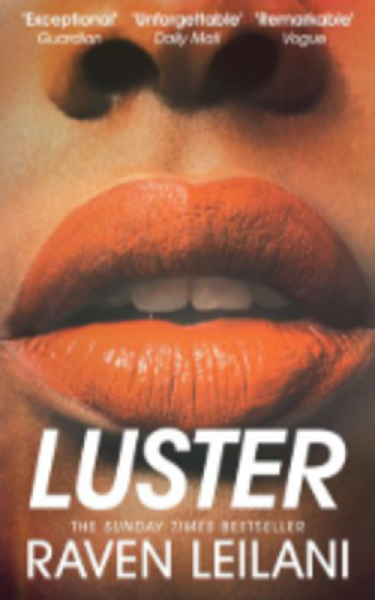
    Review of Raven Leilani’s Luster Novel

    B. Lorenzo Buckinchere

    Apr 26, 2026

    It’s the end of the month, and time once again for our monthly review series. Our muse for the month of April is Luster by Raven Leilani. But before we begin, here’s a disclaimer.

    Disclaimer:

    The following review contains spoilers. So I recommend reading the novel before reading this or any other review on the topic. Now without further ado, let’s begin.

    Overview:

    Luster is a 2020 American novel written by Raven Leilani. At 227 pages, it was Leilani’s debut novel, and was among the best received debut titles for that year.

    Plot:

    The main plot follows Edie, a twenty-something African-American woman who works at a publishing company in New York City. It is a dead-end job that she is able to keep by fulfilling sexual favors for her male colleagues, mostly White.

    Jaded with her job, and with life in general, Edie begins an online affair with Eric, an older married man from New Jersey. Eventually, they meet in person, and he takes her on a date to the amusement park.

    Despite Eric being married, Edie is smitten, often indulging in fantasies about their lives together, and how it will all end, that offers a striking peek into her psychology. This will become relevant later in the novel when Edie’s lust becomes more apparent.

    Not long after, Edie is fired from her job after setting a boundary with one of her male colleagues. With very little savings to fall back on, she is soon evicted from her Brooklyn apartment.

    One day, while out delivering food to the hospital in the rain, on her bike, Edie runs into Rebecca, Eric’s wife whom she had previously met when she found out where he lives and followed him to their home in suburban New Jersey.

    Edie quickly discovers that Rebecca has a rather interesting job. She is a practicing mortician at the morgue of the hospital. Rebecca decides to take Edie home with her, much to Eric’s dismay, though he doesn’t really say much about it.

    It turns out that Eric and Rebecca have an adopted daughter named Akila, who also happens to be African-American. As such, Rebecca subtly pays Edie with the expectation that she will act as Akila’s live-in governess, due to them being more relatable to each other. Oh yeah, there is one catch, however. Rebecca has told Edie to stay away from Eric.

    Everytime Edie takes Akila to the mall, or to her karate classes, she finds a hundred dollar bill on the table when she gets home. Edie is not being rushed to find a job, and as such, she sees an opportunity in her newfound situation to do more of what comes naturally to her, which is canvas painting.

    Edie loves to paint. As such, she often finds herself snapping photos of certain things around their home that she finds rather interesting. Most notably, one scene in particular where she snaps a photo of Eric and Rebecca having sex with their bedroom door left ajar, that she intends to sketch out in her sketchbook at a later time.

    Eventually, the temptation for Eric and Edie to keep their hands off each other had proven to be too great.

    As such, they end up sleeping together, and it isn’t long before Edie wound up pregnant by him, a plot twist that ended up giving way for the single most memorable quote in the entire book for me, “he makes you want, he makes you wicked, and as you sleep, he puts a baby inside your belly.”

    If you think that quote was pertaining to Eric, think again.

    It turns out that Eric and Rebecca are in an open marriage. But even so, Edie soon finds herself skating on thin ice with Rebecca when Rebecca found out that Edie has still been sleeping with Eric in secrecy, and was told to start searching for another job.

    Unfortunately, Edie suffers a miscarriage as a victim of police brutality, that takes place on the lawn of her employer after the police were baffled as to how someone who fits her racial profile could live in a suburban home.

    Not long after the miscarriage, Edie finds another apartment and moves back to New York with all the cash that she was able to save from being a governess.

    The novel ends with Edie, in her new apartment, doing a sketch of a half-dressed Rebecca from a photo that Rebecca had allowed her to take.

    Review:

    Though it had a female lead, this book was very relatable to me due to the timeliness of when it entered my life. And now that the title has gotten your attention, I think it’s worth noting that the kind of lust in question is more so related to a lust for survival, passion, and drive, than it is about sexual lust.

    The sex scenes in this novel are not as strongly erotic as one might expect, but the moral is far more valuable than the kind of thrills often found in erotica.

    I also think that despite her shaky financial situation, Edie felt more confident about moving back into her own apartment when she realized that she can sue the police department in New Jersey, as well as the individual arresting officer for her miscarriage, and a hate crime. I hope she takes her story to the press.

    I think it reflects a much wider anomaly within the social fabric of our society to think that this level of racism was still taking place as recent as 2020 in the land of the free.

    It’s also hard for me to ignore that the assault scene on the lawn almost parallels Derek Chauvin’s murder of George Floyd right down to the year in question, except that Edie actually survived her encounter with the police.

    This tale is about finding the right balance between survival and following your passion. Not perfect, just right. Because survival is messy, and often involves doing things that are normally out of character.

    It also makes a note of the fact that help may sometimes come from unexpected places. Not from some divine source, but simply from people helping people.

    However, in the midst of the chaos that comes with daily survival, one must never neglect to persevere in their tireless commitment to making their true passion a reality against all odds.

    I would just like to end by sharing that I first read Luster, this week back in 2024, during a very dark chapter of my life, and it has motivated me to keep writing throughout despair. With that said, there is literally no Buckinchere Collection without Luster.

    I give this one a five out of five sketch canvas.

    © 2026 The Buckinchere Publication, SP.

    All Rights Reserved.

    Within the context of Luster by Leilani, do you believe that Edie would have still found her way to her true passion if she'd kept her job?
    1 answer
  • The Lateness of the Hour (Twilight Zone Review)

    The Lateness of the Hour (Twilight Zone Review)

    Ready.

    B. Lorenzo Buckinchere

    Jul 27, 2025

    It is the end of the month, and time once again for our monthly review series here on this blog site. Our muse for the month of July is a classic Twilight Zone episode titled, “The Lateness of the Hour.”

    But before we begin, here is a disclaimer: The following review contains spoilers, so I strongly recommend watching the episode before reading this or any reviews on the topic. Now without further ado, let’s begin.

    The Twilight Zone was an American television primetime anthology series created by Rod Serling. It originally aired on CBS between 1959 and 1964, and ran for five seasons and 156 episodes.

    It was way ahead of its time due to its many themes on existentialism, and for questioning the status quo of the time, particularly as it pertains to power and racial equality, often using extraterrestrial life forms as metaphors.

    The episode in question was episode 8 of season 2, and aired originally on December 2, 1960. Written by Rod Serling, and directed by Jack Smight, it was the first of five episodes that were videotaped on a soundstage due to budget cuts.

    Though still incredibly haunting, the stiff, videotaped picture quality gave the episode more of a “Playhouse 90” or “General Hospital” feel, rather than the usual existential dread that one can expect from a typical Twilight Zone episode.

    The Premise:

    The episode features a young woman named Jana (Inger Stevens), the adult daughter of Dr. William Loren (John Hoyt), and his wife (Irene Tedrow). They live alone in a  large house, and entirely rely on their servants for domestic comfort. One rainy night in particular, Jana begins to question her parents’ dependence on their servants.

    Frustrated, Jana attacks the maid who tumbles down a flight of stairs before getting back up like nothing happened. It was only then that her father revealed that he created his servants to be quite indestructible.

    We then cut to Serling’s opening narration, “The residence of Dr. William Loren, which is in reality a menagerie for machines. We’re about to discover that sometimes the product of man’s talent and genius can walk amongst us untouched by the normal ravages of time. These are Dr. Loren’s robots, built to functional as well as artistic perfection. But in a moment Dr. William Loren, wife and daughter will discover that perfection is relative, that even robots have to be paid for, and very shortly will be shown exactly what is the bill.”

    The following scene sees Jana with her back turned to her father and his butler, yet is able to accurately lip sync every word of their conversation. The butler forgot to fill Dr. Loren’s pipe, so Jana breaks the nightly routine by offering to fill the pipe herself.

    Jana is jaded with being home with her parents every night, and suggests that they all go out to a restaurant. Her father protests that doing so is a bad idea, because they would get sopping wet in the rain on their way over there. Then they would be served on dirty, unwashed plates dealing with rude, pushy normies. After that, it would be a question of whether they succumb to ptomain, or pneumonia.

    Jana doesn’t seem to mind. She figures, “at least we get to live a little.” Or at least that’s what her attitude implies, to which her father gives her quite the sobering speech, “I have kept you from harm, I’ve protected you against disease, and insulation in this 20th century is no crime, it’s a service. You’ve never had to look into the face of war, or the face of poverty or prejudice. Well you’ve been isolated, yes. But what you think of as imprisonment just happens to be asylum, and security, yes, and survival.”

    Jana still thinks that her parents have become so overly dependent on her father’s android servants, that very soon they won’t be able to survive without them. She threatens to run away from home if her father doesn’t dismantle the androids he built, to which he refuses.

    He can’t just dismantle his life’s work, but at the same time, he loves his daughter, and doesn’t want to lose her. So he pleads with Jana to stay, but she makes another scene by climbing to the top of the stairs and announcing that the androids may be indestructible, but her parents are not.

    In that moment, it seemed like the androids were getting ready to turn on the Lorens, but in the following scene, it turns out that they are ok. Dr. Loren further pleads with Jana to stay, who is adamant that she is leaving, and starts packing her suitcase. So he makes the most rational decision that any father would make under the circumstances, and summons the androids.

    He tells them to meet him in the laboratory, and they all protest, saying what good servants they are, and why he should spare them. But his instructions are clear, his mind is made up.

    In the next scene, Jana is seen happily running around the house, checking all the closets. And when it is obvious that the androids are gone, she hugs her parents and thanks them with love and loyalty.

    She is excited that they can all go out and live like normies now that the androids are gone. But the joy that her parents get from watching Jana be happy for once soon turns to concern the moment she mentions the possibility of marrying and giving them grandchildren. She notices their concern, and asks them what’s wrong, but they excuse it away as shock that she would want to start dating so soon, and she’s not buying it.

    She flips through the family photo album, and realizes that there are no pictures of her as a child, only of the robots, some of the photos were from twenty years ago. Her father asks her if she remembers her childhood, and she surmises that she was implanted with a memory track, similar to what Dr. Loren gave his android servants.

    Dr. Loren explains to Jana that both he and Mrs. Loren were a childless couple, and that was when they “got her.” Realizing that she was made and not born, Jana runs up the stairs and bangs her wrist against the staircase railing, but is unable to feel anything, not even love. Her parents try to console her, but she is devastated to learn that her dream of having a family is ruined due to the fact that she is also an android. Her mother asks her father what to do, and he has an idea.

    In the final scene, it is revealed that Dr. Loren reprogrammed Jana to be a maid, and she is seen giving her mother a shoulder rub.

    Then we cut to Serling’s closing narration, “Let this be the postscript. Should you be worn out by the rigors of competing in a very competitive world. If you’re distraught from having to share your existence with the noises and neuroses of the 20th century. If you crave serenity, but want it full time, and with no strings attached. Get yourself a workroom in the basement, and then drop a note to Dr. and Mrs. William Loren. They’re a childless couple who made comfort a life’s work. And maybe there are a few do it yourself pamphlets still available in The Twilight Zone.”

    Takeaway:

    This particular postscript pretty much sums up the secret fantasy of every reclusive type who is forced to grind away in a hyper competitive world. This episode was way ahead of its time, and is even more relevant today than it was when it first premiered on television over 60 years ago.

    I first saw this episode about 20 years ago, during a time when I was still living in Jamaica, going through high school, and barely younger than Jana was in that episode. I thought that android maids was a cool new concept, and as such it was fun to watch at the time. But it wasn’t anywhere near as relatable to me then, as it is now. In the space of twenty years my perspective has shifted from the naivety of a sheltered brat like Jana, to the wisdom and experience of her father.

    The scene where he told her that she has never had to look into the face of poverty, prejudice or famine suggests to me that the Lorens could have lived through the great depression, or the holocaust.

    Judging by the age of the actor John Hoyt (1905-1991), he was likely among the allied forces who stormed the beaches of Normandy in 1944, which means that he stared directly into the face of war and bloodshed. Then he looked away and never looked back.

    Jana doesn’t know the ways of the world so she believes that everyone is the same. “Who feels it, knows it,” so how can one appreciate serenity away from all the noise if they have never felt the noise?

    Conclusion:

    John Hoyt is my new favorite person just for that speech that Dr. Loren gave to Jana during the episode. Rewatching this episode in the present has given me a fresh new perspective, and has only served to reinforce my commitment to an introverted, reclusive life.

    Imagine a life where liberty, security, and securities are the order of the day. Well I am of the firm belief that you are more likely to thrive as an introvert than you would in friendship groups. I give this one a solid five out of five android maids, and I’ll see you on the next one.

    © Copyright 2025 The Buckinchere Publication, SP.

    All Rights Reserved.