
Tag: Novel

  • Blog 108

    Blog 108

    Ready.

    Review of The Other Side of Nothing

    B. Lorenzo Buckinchere

    May 31, 2026

    It’s the end of the month, and time once again for our monthly review series. Our muse for the month of May is The Other Side of Nothing. But before we begin, here’s a disclaimer.

    Disclaimer:

    The following review contains spoilers, and is subject to interpretations that may not express the perspectives or intentions of the author. Please read the book in its entirety before reading this, or any other reviews on the topic.

    Trigger Warning:

    Please be forewarned, the following review discusses themes of illness, death, and self-harm. Reader’s discretion is advised.

    Now without further ado, let’s begin.

    Overview:

    The Other Side of Nothing is a 2024 American novel, written by Anastasia Zadeik, and published by “She Writes Press.” The Other Side of Nothing is Zadeik’s second novel after Blurred Fates, and is centered around a young woman (Julia) who runs away with Sam, her young lover whom she met at a mental hospital while also coming to terms with her father’s untimely death.

    Plot:

    In 2016, Julia Reeves checked herself into New York’s Brookfield Sanitarium the day after her 18th birthday. She had previously related suicidal urges to a psychiatrist named Dr. Stein, following the death of her father, Paul.

    During her stay at Brookfield, Julia becomes acquainted with some of her new neighbors while also being counselled by a therapist named Tanya. Julia has taken quite a liking towards Tanya, and thinks Tanya’s marshmallow voice is absolutely adorable.

    Being half-Black, Julia is often judged harshly by her mother’s side of the family. Her grandmother, Frances, in particular, seems to think that Julia is just going through a teenage phase for the sake of attention. Julia’s cousins appear spoiled and overprivileged on the surface. But their mother, Lillly, is more supportive of Julia and her mother, Laura.

    Laura visits her daughter at Brookfield as often as she can. Their relationship had become strained ever since Paul died. But Laura tries to be supportive of Julia’s life choices, such as her decision to grow dreadlocks, and befriend a girl named Cheyenne, who encourages her behavior.

    Then there’s something else about Julia that’s very noteworthy. She has an overactive imagination, and she likes to draw. With that said, it’s not long before Julia meets a young photographer named Sam. Sam sketches a portrait of Julia’s face, and they quickly become smitten with each other.

    One day during visiting hours, Julia and Laura encounter a woman who had come to visit Sam. The woman calls him Max, and a confused Julia suddenly becomes jealous and runs away.

    Sam later explains to Julia that the woman who visited him was actually his mother, Arabella, and that his full name is actually Maximilian Samuel Lorenzo, the third, but he likes being called by his middle name.

    He further tells Julia that his father, Max, wants to keep Sam from his grandfather’s inheritance, and that placing him at Brookfield was all part of a ruse to weaken Sam’s efforts against Max. Then they plot to run away together.

    By the time Laura and Arabella discover that their children are missing from the sanitarium, Sam had already managed to jack his old man’s ride from the parking garage using their name, and take Julia out of the city.

    Arabella’s first instinct was to call her wealthy ex-husband, but he was away in Paris with his new girlfriend, and was being rather neglectful towards Sam and Arabella.

    As such, the two mothers form an unlikely alliance, and travel across the United States in an attempt to track down their mentally unstable children before they manage to get into any trouble.

    Throughout their journey, they share details of their children’s characters as well as their interests that may offer a clue as to where they’re planning to go. Arabella is rather apprehensive about telling Laura of Sam’s previous girlfriends. Apparently, this is not his first rodeo.

    Arabella revises Julia’s bucket list, and she notices some rather interesting items, such as aspirations to go to college, as well as foods she hadn’t tried, etc. During this time, Julia leaves a paper trail by borrowing the cell phones of hotel guests to call her mother, but she doesn't say much.

    They decide to stop in Chicago first. They visit the ferris wheel because her father once took her there, but Julia had acrophobia, meaning she is afraid of heights. Laura and Arabella’s instincts were correct, because that’s exactly where Sam took Julia. Only, her acrophobia never really went away.

    Disappointed, Sam and Julia continue their journey by car while Arabella and Laura track them by air, hoping to get there first. Their next guess was that Sam probably took Julia to the Georgia O’Keefe museum in Santa Fe.

    Only this time, their instincts were dead wrong. Not because Sam didn’t plan to take Julia there, but because Sam’s ultimate destination was Half Dome in Yosemite Park, and he was running on a tight schedule.

    You see, Julia had told Sam about a once-in-a-lifetime Beaver moon that was coming up in a few days. And being a photographer, Sam wanted to take a picture of the Beaver moon from Half Dome, to replicate the 1927 photograph that was originally taken by his muse, Ansel Adams.

    Obsessed with his pursuit of the perfect photo, Sam drove for days without eating or properly sleeping. Julia started to worry, and asked Sam why he never took any of the psych meds that were prescribed for him at Brookfield.

    This was a difficult question for Sam, but he eventually answered by saying that they would dull the intensity of his life experience, and that he’d rather live out louder no matter how painful, or intense his experience might become, a reference to Camus whom they had been reading the entire ride. Sam really loved The Myth of Sisyphus.

    By the time they finally make it to Yosemite National Park, Sam is sleep deprived and disoriented. Agitated, he easily loses his patience with Julia, and goes on ahead of her, memorizing the trail towards the Half Dome rock.

    Separated from Sam, Julia borrows the cell phone of hikers at the park and calls her mother, telling her where they are. But by the time they are finally reunited, Maximilian Samuel Lorenzo had already fallen over to the other side of nothing.

    Review:

    This novel challenges the reader to contemplate the curse of creativity, and to weigh the odds of living intensely and authentically, versus seeking treatment for depression.

    It turns out that Julia was not the only one battling suicidal urges, but also Sam. Which would explain why they resonated so well with each other in the first place.

    The Other Side of Nothing is a sobering read that may cause the reader to reflect on the cost of pursuit, and whether the price is worth paying. I give this one a four out of five beaver moon monoliths, and I’ll see you on the next one.

    © 2026 The Buckinchere Publication, SP.

    All Rights Reserved.
    Would you much rather;
    0 votes
  • Blog 103

    Blog 103

    Ready.

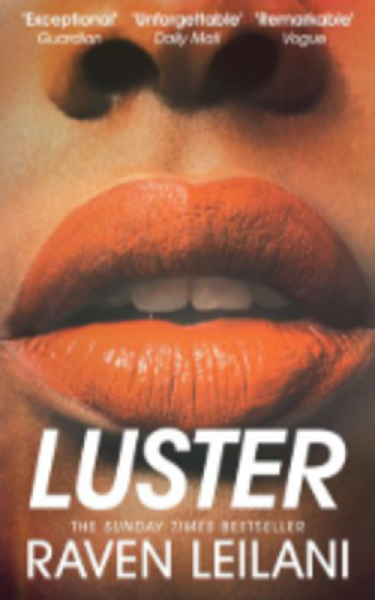
    Review of Raven Leilani’s Luster Novel

    B. Lorenzo Buckinchere

    Apr 26, 2026

    It’s the end of the month, and time once again for our monthly review series. Our muse for the month of April is Luster by Raven Leilani. But before we begin, here’s a disclaimer.

    Disclaimer:

    The following review contains spoilers. So I recommend reading the novel before reading this or any other review on the topic. Now without further ado, let’s begin.

    Overview:

    Luster is a 2020 American novel written by Raven Leilani. At 227 pages, it was Leilani’s debut novel, and was among the best received debut titles for that year.

    Plot:

    The main plot follows Edie, a twenty-something African-American woman who works at a publishing company in New York City. It is a dead-end job that she is able to keep by fulfilling sexual favors for her male colleagues, mostly White.

    Jaded with her job, and with life in general, Edie begins an online affair with Eric, an older married man from New Jersey. Eventually, they meet in person, and he takes her on a date to the amusement park.

    Despite Eric being married, Edie is smitten, often indulging in fantasies about their lives together, and how it will all end, that offers a striking peek into her psychology. This will become relevant later in the novel when Edie’s lust becomes more apparent.

    Not long after, Edie is fired from her job after setting a boundary with one of her male colleagues. With very little savings to fall back on, she is soon evicted from her Brooklyn apartment.

    One day, while out delivering food to the hospital in the rain, on her bike, Edie runs into Rebecca, Eric’s wife whom she had previously met when she found out where he lives and followed him to their home in suburban New Jersey.

    Edie quickly discovers that Rebecca has a rather interesting job. She is a practicing mortician at the morgue of the hospital. Rebecca decides to take Edie home with her, much to Eric’s dismay, though he doesn’t really say much about it.

    It turns out that Eric and Rebecca have an adopted daughter named Akila, who also happens to be African-American. As such, Rebecca subtly pays Edie with the expectation that she will act as Akila’s live-in governess, due to them being more relatable to each other. Oh yeah, there is one catch, however. Rebecca has told Edie to stay away from Eric.

    Everytime Edie takes Akila to the mall, or to her karate classes, she finds a hundred dollar bill on the table when she gets home. Edie is not being rushed to find a job, and as such, she sees an opportunity in her newfound situation to do more of what comes naturally to her, which is canvas painting.

    Edie loves to paint. As such, she often finds herself snapping photos of certain things around their home that she finds rather interesting. Most notably, one scene in particular where she snaps a photo of Eric and Rebecca having sex with their bedroom door left ajar, that she intends to sketch out in her sketchbook at a later time.

    Eventually, the temptation for Eric and Edie to keep their hands off each other had proven to be too great.

    As such, they end up sleeping together, and it isn’t long before Edie wound up pregnant by him, a plot twist that ended up giving way for the single most memorable quote in the entire book for me, “he makes you want, he makes you wicked, and as you sleep, he puts a baby inside your belly.”

    If you think that quote was pertaining to Eric, think again.

    It turns out that Eric and Rebecca are in an open marriage. But even so, Edie soon finds herself skating on thin ice with Rebecca when Rebecca found out that Edie has still been sleeping with Eric in secrecy, and was told to start searching for another job.

    Unfortunately, Edie suffers a miscarriage as a victim of police brutality, that takes place on the lawn of her employer after the police were baffled as to how someone who fits her racial profile could live in a suburban home.

    Not long after the miscarriage, Edie finds another apartment and moves back to New York with all the cash that she was able to save from being a governess.

    The novel ends with Edie, in her new apartment, doing a sketch of a half-dressed Rebecca from a photo that Rebecca had allowed her to take.

    Review:

    Though it had a female lead, this book was very relatable to me due to the timeliness of when it entered my life. And now that the title has gotten your attention, I think it’s worth noting that the kind of lust in question is more so related to a lust for survival, passion, and drive, than it is about sexual lust.

    The sex scenes in this novel are not as strongly erotic as one might expect, but the moral is far more valuable than the kind of thrills often found in erotica.

    I also think that despite her shaky financial situation, Edie felt more confident about moving back into her own apartment when she realized that she can sue the police department in New Jersey, as well as the individual arresting officer for her miscarriage, and a hate crime. I hope she takes her story to the press.

    I think it reflects a much wider anomaly within the social fabric of our society to think that this level of racism was still taking place as recent as 2020 in the land of the free.

    It’s also hard for me to ignore that the assault scene on the lawn almost parallels Derek Chauvin’s murder of George Floyd right down to the year in question, except that Edie actually survived her encounter with the police.

    This tale is about finding the right balance between survival and following your passion. Not perfect, just right. Because survival is messy, and often involves doing things that are normally out of character.

    It also makes a note of the fact that help may sometimes come from unexpected places. Not from some divine source, but simply from people helping people.

    However, in the midst of the chaos that comes with daily survival, one must never neglect to persevere in their tireless commitment to making their true passion a reality against all odds.

    I would just like to end by sharing that I first read Luster, this week back in 2024, during a very dark chapter of my life, and it has motivated me to keep writing throughout despair. With that said, there is literally no Buckinchere Collection without Luster.

    I give this one a five out of five sketch canvas.

    © 2026 The Buckinchere Publication, SP.

    All Rights Reserved.

    Within the context of Luster by Leilani, do you believe that Edie would have still found her way to her true passion if she'd kept her job?
    1 answer